An Investigation into the Effectiveness of Kefir in Managing Stress and Anxiety in College Students. A Randomised Controlled Trial with Assessment of Nutritional Status.
Colm Nolan, Lorna Doyle and Bruce Wardrop, South East Technological University
Abstract
With anxiety and stress becoming increasingly prevalent, the need for practical interventions has grown. Nutritional psychiatry has explored probiotics, omega-3, vitamin D and fibre in managing mental health via the gut-brain axis. This paper aimed to determine the effectiveness of kefir in managing anxiety, stress and gastrointestinal (GI) health. It also examined the relationship between omega-3, vitamin D and fibre intake, and these outcomes, as well as the influence of GI health on anxiety and stress. Sixteen participants were assigned to an intervention (kefir) or control (rice milk) group and consumed 250 ml of their allocated drink for 14 consecutive days. Anxiety, stress, GI health and dietary intake were measured pre- and post-intervention. Findings showed that anxiety significantly reduced in both the kefir (Mean difference = 2.5, p = 0.033) and control groups (mean difference = 4.5, p = 0.005), with no significant difference between groups (p = 0.197). There were no significant changes in stress or GI health. Baseline GI health was not significantly correlated with anxiety or stress. Nutrient intake had no significant associations with anxiety, stress or GI health. Therefore, kefir did not reduce anxiety or stress compared with the control condition. Future research should include longer trials, larger sample sizes and biomarker use.
Keywords: Effect of kefir on anxiety, Kefir and perceived stress, Probiotics and Anxiety in College students, Impact of gut health on anxiety, Gut-brain axis, Mental health, Nutritional psychiatry in healthy adults
Introduction
Stress and anxiety disorders have become such a prevalent part of our existence (Goodwin et al., 2020: 443), and the need for accessible interventions has never been greater. While medicinal approaches have remained a source of support for managing such disorders, a strategy in the form of nutritional psychiatry has emerged (Norwitz and Naitoo, 2021). With that, an emphasis has been placed on the gut-brain axis.
The gut-brain axis has been linked to the regulation of anxiety and stress (Lee and Kim, 2021: 3; Morys et al., 2024). Anxiety is a multidimensional and often misunderstood psychological condition. Conceptually, anxiety can arise from the belief that one is under threat or danger (Gouveia, 2022: S671), becoming a disorder if these beliefs persist for more than 6 months (Stein and Sareen, 2015: 2059). Stress, on the other hand, is described as a state of worry or mental tension caused by a difficult situation, while chronic stress has been linked to the development of anxiety disorders (Khan and Khan, 2017). Anxiety and stress may also be influenced by alterations in gut microbial composition, which have been associated with changes in dopamine and serotonin signalling (Wilson et al., 2024: 80–82). Similarly, inflammation (Spaeth et al., 2018: 397) and lower gut microbiome diversity (Huang et al., 2022: 398) have been associated with greater symptoms of stress and anxiety. This association underscores the importance of understanding how the gut microbiota develops and interacts with psychological functioning.
Gut microbiota diversity is initially shaped through variables in early life such as infection, antibiotic use, host genetics and mode of birth delivery (Cryan et al., 2019: 1904). Thereafter, dietary patterns play an important role in gut microbiota diversity and gut-brain axis functionality (Roy, 2024). Probiotic intake represents one such dietary strategy for modulating the gut microbiota. Probiotics are defined as living microorganisms that provide a health benefit to the host when consumed in sufficient quantities (Hill et al., 2014: 506). In a randomised controlled trial of healthy pregnant women, probiotic supplementation increased the functional (metabolic) diversity of the gut microbiome (Ma et al., 2024). The gut microbiota is also involved in the production of neurotransmitters such as serotonin and dopamine, which are implicated in mood regulation (Al-Doghaither et al., 2023). Additionally, a systematic review and meta-analysis found that probiotic supplementation may reduce cortisol, a key stress hormone, including in healthy populations (Jain et al., 2024).
Probiotics may therefore offer a promising, non-invasive avenue for supporting mental health within nutritional psychiatry. However, probiotics are distinct from fermented foods, which are foods produced through desired microbial growth and the enzymatic conversion of food components (Marco et al., 2021: 196). Although many fermented foods contain live microorganisms, the presence of live cultures does not in itself indicate probiotic activity. Fermented foods only qualify as probiotics where there is evidence that the microorganisms they contain are delivered at an adequate level and confer a health benefit in humans (Hill et al., 2014: 511).
Kefir is a dairy product derived from the fermentation of kefir grains in milk. Kefir contains a diverse symbiotic community of bacteria and yeasts that provides an optimal environment for the development of bacteria, which could elicit positive effects. These communities contain multiple strains of Saccharomyces, Leuconostoc, Bifidobacterium and Lactobacillus, which may offer health benefits for the host (Kim et al., 2019: 1784). However, when kefir itself was examined in a single-arm trial of women with polycystic ovary syndrome (PCOS), eight weeks of daily 250 ml consumption did not significantly alter alpha diversity or beta diversity of the gut microbiota. Nevertheless, participants reported significant improvements in the mental health domain of the SF-36 quality-of-life questionnaire (Çıtar Dazıroğlu et al., 2024: 5638–39). Kefir has also enhanced positive affect in overweight adults relative to milk (Pražnikar et al., 2020: 2966), although reductions in depressive symptoms did not differ from the control group in adults with non-alcoholic fatty liver disease (Mohsenpour et al., 2023: 5). In healthy adults, kefir reduced gastrointestinal (GI) symptoms without significantly improving mental well-being (Bakırhan et al., 2025: 5) and did not significantly alter anxiety, depression or stress markers (Cannavale et al., 2023: 269). Consequently, its effects on anxiety and stress in healthy populations remain unclear.
Beyond probiotics and fermented foods, several individual nutrients, including omega-3 fatty acids (Zinkow et al., 2025), vitamin D (Cheng et al., 2020: 553; Singh et al., 2020) and dietary fibre (La Torre et al., 2021), have been independently linked to both the gut microbiota and mental health outcomes.
Omega-3 fatty acids, including eicosapentaenoic acid (EPA) and docosahexaenoic acid (DHA), have anti-inflammatory properties that may counteract the adverse effects of inflammatory stress exposures on the gut (Fu et al., 2021: 4). These stressors may influence gut microbial composition and intestinal epithelial damage (Fu et al., 2021: 4; Pai et al., 2020: 258), and omega-3 intake has been linked to improved gut function and intestinal barrier integrity (Kawamura et al., 2023: 198–200). Omega-3 intake may also play a role in managing psychological well-being (Kumarasivam et al., 2022). It acts by lowering inflammatory markers, like IL-1β, which are elevated in individuals with stress- and anxiety-related disorders; therefore, a reduction in these markers may result in improved stress and anxiety outcomes (Polokowski, 2019).
Vitamin D has multiple physiological roles, including anti-inflammatory effects within the gut and neuroregulatory functions relevant to mental health. Within the gut, vitamin D has been shown to alter microbiota composition, including the Firmicutes-to-Bacteroidetes ratio, with associated reductions in inflammatory markers (Garcia et al., 2020; Singh et al., 2020). In relation to mental health, a systematic review and meta-analysis found that vitamin D supplementation may reduce negative emotions (Cheng et al., 2020: 553). Furthermore, in individuals with psychiatric conditions, vitamin D supplementation reduced C-reactive protein (CRP), an inflammatory marker associated with chronic stress and anxiety (Jamilian et al., 2019: 8). Additionally, vitamin D plays a role in the regulation of serotonin (Alimohammadi-Kamalabadi et al., 2024). Serotonin is known for its role in regulating mood and mental health disorders (Albert and Blier, 2023: E400).
Finally, dietary fibre is a major determinant of gut microbiota composition. A systematic review of intervention trials in healthy adults found that fibre altered gut microbiota composition, with effects dependent on the dose, type and structure of the fibre consumed (Vinelli et al., 2022: 7–8). Similarly, a systematic review and meta-analysis of randomised controlled trials in healthy adults found that fibre interventions increased faecal Bifidobacterium and Lactobacillus abundance (So et al., 2018: 969). Fibre fermentation also increases faecal short-chain fatty acid concentrations, which reduce inflammation and support intestinal health (Vinelli et al., 2022). These mechanisms may also support mental health by regulating gut hormones associated with psychological well-being (La Torre et al., 2021). In an observational study, higher dietary fibre intake was associated with up to 33 per cent lower odds of anxiety and 29 per cent lower odds of psychological stress (Esmaillzadeh et al., 2021).
The evidence presented suggests that these nutrients enhance gut health and may subsequently improve anxiety and stress levels. These coinciding benefits reinforce the importance of including these nutrients as part of a diet for both psychological well-being and GI function.
The interplay that exists between GI health and mental health disorders represents an opportunity for the development of innovative approaches to managing related conditions. Although evidence highlights the potential for probiotics and certain nutrients that enhance the gut-brain axis to improve mental health outcomes, this opportunistic avenue is not exempt from significant research gaps.
Human trials examining kefir and mental health outcomes remain scant, with much of the existing evidence derived from animal models (Silva et al., 2023: 412). Syntheses of research on gut alterations and anxiety have similarly drawn on animal-based trials (Simmons et al., 2020: 431). Where human trials of kefir have been conducted, they have often involved clinical populations (Çıtar Dazıroğlu et al., 2024; Mohsenpour et al., 2023), whereas the present trial was conducted in healthy adults.
In addition, other research has determined the efficacy of probiotics in pregnant women, which is an inherently specific population (Ma et al., 2024). Omega-3 has been shown to alter gut microbiota composition; however, the population consisted of individuals with ulcerative colitis (Prossomariti et al., 2017: 7). Similarly, research examined vitamin D and its role in influencing the gut-brain axis; however, these studies were based on outcomes in participants with psychiatric conditions (Alimohammadi-Kamalabadi et al., 2024; Jamilian et al., 2019: 2). Although promising, these findings limit generalisability, proving difficult to translate to a population with non-psychiatric disorders and no GI issues.
A systematic review and meta-analysis of 34 controlled clinical trials found that probiotics produced small but significant improvements in symptoms of depression and anxiety (Liu et al., 2019: 13). However, while an overall benefit of probiotics on mental health outcomes has been observed, findings for anxiety tend to be weaker than for depression (Asad et al., 2025). Although these findings present a case for managing mental health through probiotic intake, the influence of probiotics in independently managing anxiety and stress, rather than as part of broader or combined mental health interventions, remains underexplored.
This paper aims to address these gaps by examining the independent effects of kefir on anxiety, stress and GI health in a healthy adult population. This research will also examine the impact of omega-3, vitamin D and fibre on the same variables. Finally, the role of gastrointestinal health in the development of anxiety and stress will be examined.
This research aligns with the broader field of nutritional psychiatry, which examines the biological mechanisms linking diet and mental health, including the gut-brain axis and the role of dietary interventions in both prevention and treatment (Marx et al., 2026: 2). By examining kefir and specific nutrients in a healthy population, this study explores their potential as preventative, diet-based strategies for managing anxiety and stress. The insights gathered may inform future research aimed at developing accessible dietary-based interventions.
Methodology
Design
A randomised controlled trial was implemented to determine the effectiveness of kefir in managing stress and anxiety. An additional focus was placed on the assessment of nutritional status (omega-3, vitamin D and fibre) and GI symptoms.
The intervention was carried out over 14 days. The participants, at a 1:1 ratio, were randomly assigned to either the intervention group or the control group. To ensure random distribution, participants were assigned using computer software (gigacculator.com). The respective groups were instructed to consume 250 ml (Çıtar Dazıroğlu et al., 2024: 5633–43) of Biotiful kefir yoghurt drink or 250 ml of Joya rice milk for 14 consecutive days. Biotiful kefir is a fermented dairy drink made from pasteurised cow’s milk and live kefir cultures, including Bifidobacterium, Lactobacillus acidophilus, Lactobacillus casei and Lactobacillus rhamnosus (as stated by the manufacturer). Rice milk was selected as the control because it is a non-fermented beverage containing no live microbial cultures. Neither beverage contained a meaningful amount of dietary fibre (kefir: 0 g per 250 ml serving; rice milk: 0.75 g per 250 ml serving) and neither was fortified with vitamin D. Participants were instructed as per the participant information leaflet to record any adverse effects.
Participants completed pre- and post-intervention questionnaires that contained validated scales for anxiety (Appendix A), stress (Appendix B) and GI health (Appendix C). Participants were also asked to record a food diary (Appendix D) pre- and post-intervention.
The primary outcome of interest was anxiety, with perceived stress and GI symptoms examined as secondary outcomes. The assessment of nutritional status, including omega-3, vitamin D and fibre intake, together with the relationship between GI health and psychological outcomes, was exploratory in nature and intended to inform hypotheses for future research.
Study population and sampling
Participants were recruited through non-probability convenience sampling from South East Technological University in Waterford. Individuals who contacted the research group were sent an eligibility criteria form (Appendix E) to determine suitable eligibility for participation. Participants who were eligible received a participant information leaflet (Appendix F). This leaflet highlighted the research background, goals and participant instruction. Prior to the trial taking place, an informed consent form (Appendix G) and GDPR form (Appendix H) were completed and signed by each participant.
Sixteen participants (six male and ten female) were selected using this sampling strategy. Recruitment was limited by the time available to complete the research project and the cost of supplying the study drinks. A formal power calculation was not undertaken.
The inclusion criteria required participants to: (1) be aged 18–30 years old, (2) not be taking antibiotics nor have taken them in the previous three months, as antibiotics can alter gut microbiome, (Konstantinidis et al., 2020) and (3) be willing to consume kefir for 14 consecutive days. The exclusion criteria required that selected participants must not: (4) be diagnosed with any gut related illnesses, (5) be diagnosed with severe psychiatric disorders and (6) be allergic to dairy or have a lactose intolerance.
Measurement tools and data collection procedures
Three-day food diary (Appendix F)
A food diary, including fluid intake, was completed by each participant before and after the intervention. The food diary was analysed observationally using dietary analysis software (Nutritics).
Gastrointestinal Gut Health Questionnaire (Appendix G)
This measurement tool assessed GI symptoms (Walter et al., 2021: 1408). This tool provided an understanding of the participants’ gut health.
The questionnaire adopted a scoring system represented by a scale from 0 to 100, in which participants rated their symptoms in accordance with the question. This indicated the severity of the gut health problem, with higher scores representing more severe conditions. The scales scores were added together without the participants’ knowledge of their total. A score of over 210 from the first four questions indicated poor gut health. This tool was the primary measure of gut health and was administered pre- and post-intervention.
The Perceived Stress Scale (PSS) (Appendix H)
This measurement tool determined stress levels for each participant (Harris et al., 2023:847–48). The tool consists of questions that relating to the participants’ thoughts and feelings. Scores were derived from the participants’ answers, where the range represents the participants’ feelings toward the question, which is answered from 0 (Never) to 4 (Very often). Some questions required reverse scoring as they were positively worded. The final scoring was calculated by summing the scores for each question. A score below 20 represented a low stress score; 20–30 represented a stressed score; finally, anything over 30 correlated to a very stressed score.
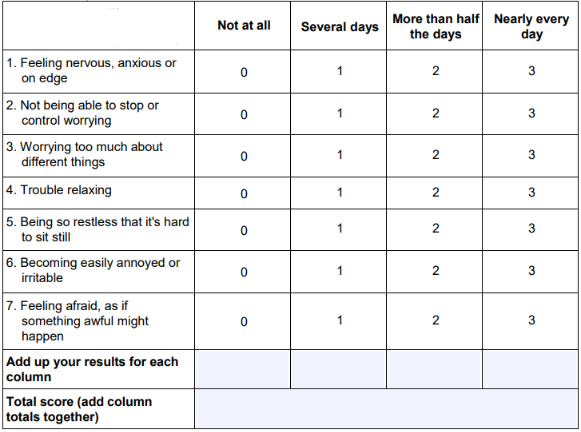
Generalised Anxiety Disorder (GAD-7) (Appendix I)
This measurement tool consists of seven questions to be answered by each participant. These questions all relate to common anxiety symptoms (Shevlin et al., 2022), including symptoms such as nervousness, worry and irritability.
The scale ranges from 0 (Not at all) to 3 (Nearly every day). The scores from the seven questions were then added to determine the anxiety levels of each participant. Scores between 0–4 represented low anxiety, 4–8 was considered as mild anxiety, over 8 was considered high anxiety and a total score above 15 suggested severe anxiety levels. This tool was used pre- and post-intervention.
Data collection procedure
A Microsoft form was developed to include the GI symptom questionnaire, the PSS and the GAD-7 questionnaire. This form was sent out to each participant pre- and post-intervention. A food diary template was also distributed to each participant before and after the intervention. The completed forms were then sent back for analysis. This procedure allowed for accessible and efficient collection of data.
Data analysis
JASP was used as the statistical software for data analysis, with p-values < 0.05 considered statistically significant. Descriptive statistics were utilised to assess baseline data. A mean ± SD was used when displaying results.
To determine differences in participant characteristics between groups, an independent-samples t-test was used. Mann-Whitney U was used for data that was non-normally distributed. Welch’s t-test was used where unequal variance was present. Paired samples t-tests were conducted to determine the effectiveness of kefir in managing anxiety and stress by comparing pre- and post-intervention scores. To examine whether nutrient intake was associated with anxiety, stress or GI health, a Spearman’s rank correlation analysis was conducted. Lastly, to measure whether GI health was associated with anxiety or stress, a Spearman’s rank correlation analysis was also utilised. Correlation analyses were based on baseline data only.
Ethical approval
Ethical approval was received from the Ethics Committee of the School of Health Sciences at South East Technological University (SETU), Waterford.
Results
Participant characteristics and baseline data
Sixteen college students (age 21.19 ± 0.91 years; 6 male, 10 female) were randomly allocated, at a 1:1 ratio, to the kefir group (n = 8) or the control group (n = 8). On average, participants reported mild anxiety symptoms, low perceived stress and good GI health at baseline (Table 1). There were no statistically significant differences between groups in any baseline characteristic (p > 0.05).
Assumptions testing was conducted to determine the most appropriate statistical tests for each variable. Mann-Whitney U tests were employed in the case for non-normal distributions (GAD-7). Test of equality of variances highlighted unequal variances from stress scores (p =.041) and GI health (p = 0.021). Welch’s t-test was used for these respective variables.
Table 1: Baseline and descriptive characteristics with group comparisons between kefir and control groups
Measure |
Total Sample
(n = 16)
|
Intervention Group
(n = 8)
|
Control Group
(n = 8)
|
p-value |
Age |
21.19 ± 0.91 |
21.5 ± 0.93 |
20.88 ± 0.84 |
0.197 |
GAD-7 |
8.63 ± 5.4 |
7.63 ± 4.07 |
9.62 ± 6.63 |
0.789 |
PSS |
11.13 ± 3.38 |
10.75 ± 4.59 |
11.5 ± 1.77 |
0.676 |
GI health |
91.06 ± 79.79 |
81.88 ± 38.54 |
100.25 ± 107.81 |
0.661 |
Values are presented in the table as mean ± standard deviation. p-values are taken from Mann-Whitney U tests where normality was not met and Welch’s t-tests where unequal variance was indicated. No statistically significant differences were found between the intervention and control groups at baseline (p > 0.05).
Anxiety, stress and GI health outcomes following kefir intervention and control conditions
Paired sample t-tests revealed a significant reduction in GAD-7 scores in the kefir group (t(7) = 2.65, p = 0.033), with a large effect size (d = 0.94) (Table 2) (Figure 1). In contrast, no clinically significant change was observed in the kefir group’s PSS scores (t(7) = 0.66, p = 0.534) with a smaller effect size (d = 0.23) (Figure 3). Although GI symptoms reduced, there was no significant difference observed (t(7) = 2.17, p = 0.067) (Table 2).
Significant reductions were found in the control group’s GAD-7 scores (t(7) = 3.97, p = 0.005), with a large effect size (d = 1.4) (Figure 2). However, the assumption of normality was not met for these scores (p = 0.002). In contrast, the control group saw no significant change in the PSS scores (t(7) = -0.489, p = 0.639), with a negligible effect size (d = -0.17)(Figure 4). Finally, GI symptoms were reduced in the control group; however, no significant changes were highlighted (t(7) = 1.37, p = 0.212) (Table 2).
As shown in Table 2, independent-samples t-tests indicated no statistically significant difference between the kefir group and the control group in post-intervention reductions across anxiety (p = 0.197), stress (p = 0.474) or GI health symptoms (p = 0.955). All values were calculated post-intervention.
Table 2: Difference between GAD-7, PSS and GI health scores post-trial for intervention group and control condition
Domain |
Group |
Pre
(Mean ± SD)
|
Post
(Mean ± SD)
|
Mean difference |
Effect size |
p-value |
|
|
GAD-7
(Anxiety)
|
Kefir |
7.63 ± 4.07 |
5.13 ± 4.67 |
2.5 |
0.94 |
0.033* |
|
|
Control |
9.63 ± 6.63 |
5.13 ± 5.49 |
4.6 |
1.4 |
0.005* |
|
|
|
|
|
|
|
Between-group
p-value
|
0.197 |
|
PSS
(Stress)
|
Kefir |
10.75 ± 4.59 |
10 ± 3.96 |
0.75 |
0.23 |
0.534 |
|
|
Control |
11.50 ± 1.77 |
12.25 ± 3.88 |
-0.75 |
-0.17 |
0.639 |
|
|
|
|
|
|
|
Between-group
p-value
|
0.474 |
GI Health |
Kefir |
81.88 ± 38.54 |
45.63 ± 32.67 |
43.34 |
0.767 |
0.067 |
|
|
Control |
100.25 ± 107.81 |
65.75 ± 74.5 |
34.0 |
0.485 |
0.212 |
|
|
|
|
|
|
|
Between-group
p-value
|
0.955 |
Mean difference pre- and post-mental health domains in the kefir and control group. Pre- and post-values are presented as ± standard deviation. The p-value indicates no statistically significant difference between groups. * indicates a statistically significant difference between pre- and post-values.
Figure 1: Pre- and post-intervention GAD-7 scores in the kefir group (n = 8). Lines represent paired observations for each participant. Black markers denote the group mean ± 95% confidence interval
Figure 2: Pre- and post-intervention GAD-7 scores in the control group (n = 8). Lines represent paired observations for each participant, overlapping lines denote identical scores. Black markers denote the group mean ± 95% confidence interval
Figure 3: Pre- and post-intervention PSS scores in the kefir group (n = 8). Lines represent paired observations for each participant, overlapping lines denote identical scores. Black markers denote the group mean ± 95% confidence interval
Figure 4: Individual pre- and post-intervention PSS scores in the control group (n = 8). Lines represent paired observations for each participant. Black markers denote the group mean ± 95% confidence interval
Effect of GI health on anxiety and stress
Baseline GI symptom scores were not significantly correlated with anxiety (ρ = 0.29, p = 0.271) or stress (ρ = 0.31, p = 0.239) (Table 3).
Table 3: Correlation between GI health with anxiety and stress
Mental Health Domain |
ρ |
p-value |
Significant Correlation? |
Direction |
|
GAD-7
(Anxiety)
|
0.29 |
0.271 |
No |
N/A |
|
PSS
(Stress)
|
0.31 |
0.239 |
No |
N/A |
Spearman’s rho (ρ) is presented for the correlation between baseline GI health and anxiety and stress (n = 16). p-values represent statistically significant associations (p < 0.05).
Effect of nutrient intake (omega-3, vitamin D, fibre) on anxiety, stress and GI health
Mean values for each of omega-3, vitamin D and fibre were analysed across the sample (n = 16) (Table 4). There were no statistically significant correlations observed between nutrient intake with either mental health outcome (anxiety and stress) or GI health (p > 0.05) (Table 5).
Table 4: Mean daily intake of omega-3, vitamin D and fibre
Nutrient |
Mean ± SD |
Minimum |
Maximum |
Omega-3 (g) |
1.57 ± 1.83 |
0.2 |
7 |
|
|
|
|
Vitamin D (µg) |
4.54 ± 4.35 |
0.4 |
17.1 |
|
|
|
|
Fibre (g) |
22.56 ± 8.66 |
12.1 |
43 |
Values are presented in the table as mean ± standard deviation
Table 5: Correlation between omega-3, vitamin D and fibre with anxiety, stress and gut health
|
Mental
health
domain
|
Nutrient |
ρ |
p-value |
Significant correlation? |
Direction |
|
GAD-7
(Anxiety)
|
Omega-3 |
0.03 |
0.901 |
No |
N/A |
|
Vitamin D |
0.44 |
0.086 |
No |
N/A |
|
Fibre |
0.04 |
0.886 |
No |
N/A |
|
|
|
|
|
|
|
PSS
(Stress)
|
Omega-3 |
0.16 |
0.543 |
No |
N/A |
|
Vitamin D |
0.10 |
0.715 |
No |
N/A |
|
Fibre |
-0.48 |
0.058 |
No |
N/A |
|
|
|
|
|
|
GI Health |
Omega-3 |
0.09 |
0.731 |
No |
N/A |
|
Vitamin D |
0.02 |
0.950 |
No |
N/A |
|
Fibre |
0.07 |
0.807 |
No |
N/A |
Spearman’s rho (ρ) is presented for correlations between baseline nutrient intake and anxiety, stress and GI health (n = 16). p-values represent statistically significant associations (p < 0.05).
Discussion
Summary of main research findings
The aim of this research was to examine the effectiveness of kefir yoghurt in managing anxiety, stress and GI health in a healthy population. This was accompanied by exploratory analyses of nutrient intake (omega-3, vitamin D and fibre) on the same variables as well as an examination of the relationship between GI health and psychological outcomes (anxiety and stress). A statistically significant reduction in GAD-7 scores across the kefir group and control group was observed in the trial’s findings. However, there was no significant difference between groups post-intervention. This reduction may reflect placebo effects or natural changes in symptoms over time, and the small sample size may have limited the ability to detect a difference between groups.
In contrast, changes in PSS scores were not statistically significant, which may limit kefir’s broader applicability as a therapeutic intervention in managing stress. Additionally, the absence of a statistically significant difference in GI health scores post-intervention in the kefir group weakens the claim that probiotics improve anxiety or stress through improving GI health. Moreover, no significant correlation emerged between baseline GI symptoms and anxiety or stress, which is inconsistent with previous research in this area (Bloom et al., 2021; Cryan et al., 2019:1877).
Similarly, no significant correlations were revealed between nutrient intake (omega-3, vitamin D and fibre) and levels of anxiety, stress or GI health. This discussion will expand on these findings by addressing the study’s limitations and offering direction and guidance for future research.
Descriptive characteristics and baseline data
Baseline data offered a strong foundation for evaluating the effectiveness of the intervention. There were no statistically significant differences observed between the intervention and the control group across age, anxiety, stress or GI health, which confirmed comparability. This finding suggests that randomisation was successful, which boosts the internal validity of the randomised control trial. Baseline scores also indicated mild anxiety, low perceived stress and good GI health, which provide important context in determining the effectiveness of the intervention.
Effectiveness of kefir in managing anxiety and stress
Evidence from this study highlighted significant reductions in GAD-7 scores in both the intervention and control groups. This suggests that kefir alone did not influence anxiety outcomes in the sample. These findings may relate to the potential of a placebo response taking place, which is often a challenge within the area of nutritional psychiatry. Similar conclusions were reported by Moschinis et al. (2024), where both the intervention group and the placebo group showed similar reductions in anxiety after 6 weeks and 12 weeks of probiotic consumption, with no significant reduction observed between groups. This highlights the premise that psychological outcomes may be influenced by external factors rather than the active component in isolation.
Additionally, this intervention focused on a non-psychiatric population. This study design was similar to Tran et al. (2019: 271), who implemented a 28-day probiotic intervention in healthy young adults. Their study reported no significant between-group differences, which was also a determinant factor in the present study. Tran et al. (2019: 274) also determined that a ceiling effect may have influenced their findings, which may have similarly skewed results for this study. This observation suggests that detecting the effectiveness of the intervention may prove challenging when participants do not present with elevated symptoms of anxiety. This interpretation is supported by a meta-analysis, which found that the effects of probiotics on anxiety and depression were negligible in non-clinical samples compared with clinical samples (Liu et al., 2019: 13).
In contrast, there were no significant changes in either group for stress. This suggests that kefir did not provide any meaningful effects for improvements in perceived stress. Other research has contradicted these findings, inferring that probiotic intake may influence stress outcomes through cortisol regulation or through anti-inflammatory avenues (Jain et al., 2024). The two-week time intervention period may have been insufficient to elicit notable changes in chronic stress perception. Studies have suggested that probiotic intake may only elicit reductions in cortisol and pro-inflammatory markers after 12 weeks (Lew et al., 2019: 2053). Significant changes in stress scores from this study are likely to have required an longer intervention period to allow these biological pathways to materialise.
Other research in this area has also mentioned that stress-based probiotic interventions may only yield significant effects in populations exposed to high stress (Papalini et al., 2018), in contrast to the present study, where stress levels were only moderate.
Additionally, kefir intake did not significantly reduce symptoms associated with GI discomfort. This further weakens the hypotheses that kefir improves gut health, which indirectly improves either stress or anxiety.
These findings underscore the complexity of evaluating probiotic interventions for psychological well-being, where external factors and limited evidence continue to obscure their true significance.
GI health’s role in managing anxiety and stress
Findings from this study demonstrated no significant correlation between baseline GI health and anxiety. These outcomes are inconsistent with previous research, which supports the notion that GI health influences anxiety outcomes (Wang et al., 2023: 4926) and suggests that individuals with high levels of anxiety also exhibit poorer GI health (Tayama et al., 2017: 1). The small sample size and generally good GI health of participants may have limited the ability to detect this association.
Similarly, this research found no correlation between GI health and stress. This relationship is perhaps slightly ambiguous, reflecting the complex nature of stress. While anxiety is at times easier to identify and usually follows a more physiologically distinct pattern, perceived stress can be contextual and often difficult to define clearly (Nater, 2021: 1265). Future research should focus on the multidimensional assessments of perceived stress, which is proportionate to its contingent nature.
The conclusions from this study in relation to GI health, anxiety and stress highlight the need for future investigation with the necessary study design improvements.
The effects of omega-3, vitamin D and fibre intake on anxiety, stress and gastrointestinal health
In the exploratory analyses, this study found no significant correlation between nutritional intake and anxiety or stress. These findings were inconsistent with previous research, which has highlighted the roles of omega-3, vitamin D and fibre in producing certain positive effects on related psychological outcomes and GI health (Cheng et al., 2020: 553; Esmaillzadeh et al., 2021; Kumarasivam et al., 2022). The notably low intake of omega-3, vitamin D and fibre indicated that several participants reached sub-clinical levels for each of the chosen nutrients. This may provide an initial reasoning for the absence of significant correlation between these variables.
Additionally, no significant correlations were found when assessing the relationship between these nutrients and GI health. These findings are inconsistent with previous studies, which have demonstrated the benefits of omega-3, vitamin D and fibre in improving GI health (Fu et al., 2021: 4; Singh et al., 2020; So et al., 2018: 969). Assessing omega-3’s ability to improve GI health is often complicated by factors such as dose, individual metabolism and variability in gut microbiota response to the nutrient (Fu et al., 2021: 6; Zhu et al., 2021: 1), none of which were measured in this study. Additionally, difficulty in relating vitamin D to GI health presents challenges in smaller sample sizes (Bashir et al., 2015: 1487), which was apparent in the current study. Lastly, linking fibre to improvements in GI health may also prove difficult in studies like this one. Fibre’s physicochemical properties can vary based on origin and processing of the nutrient, which can lead to changes in bioavailability and contribute to unreliable findings in data (Gill et al., 2020: 101).
As this study revealed no significant correlation between these nutrient intake and GI health, the complexity of confounding factors such as sufficient intake, individual variability and nutrient uptake provides a potential reasoning for this absence of linear association.
Limitations
Generalisability was limited due to the sample being constrained to college students. Previous studies have suggested that physiological outcomes and gut microbiota composition can be affected by age, gender and lifestyle-related variation (Cryan et al., 2019: 1877; Filmonova et al., 2024). This may affect applicability when linking findings to a general population.
In addition, a short-term intervention period of 14 days may have proved insufficient to produce any significant differences relating to anxiety, stress or GI health, potentially reflecting transient outcomes rather than the development of systemic changes. Several studies have highlighted that changes in underlying mechanisms relating to anxiety, stress and gut microbiota composition may require sufficient time to develop (Lew et al., 2019: 2053; Ma et al., 2021: 1).
Limitations extended to the sample size (n=16), which reduced the reliability of the data and increased the possibility of a Type II error, which may have prevented the true effectiveness of kefir from being detected.
Given that the study relied on self-reported data for all outcome variables (anxiety, stress and GI health), the results may also be subject to certain biases (Gorber and Tremblay, 2016: 369). This reliance could have led to inaccuracies in the data due to the potential of under- or over-reporting for certain symptoms (Gorber and Tremblay, 2016: 371).
This study also did not account for potential confounding factors such as physical activity, stress exposures or sleep, all of which may have hindered the independent effects of kefir and nutrient intake on psychological outcomes (Bozdoğan et al., 2024).
Future recommendations
Future research should incorporate a longer trial period. Probiotics can take a minimum of 8 weeks to elicit measurable psychological effects (Ma et al., 2021:1). Extending the duration of the intervention would provide a suitable environment for a more accurate representation of probiotics’ influence on mental well-being.
To improve statistical power and reduce the chance of a Type II error, a larger sample size should be used in future research. Trials that are at risk of this error often lack sensitivity to identify significant effects (Mukti, 2025: 127).
To increase the robustness of the methodology, future studies should focus on objective adherence tracking such as blood and stool sampling. Adding this biological verification would help to provide non-biased and accurate measures of data (Nogueira-Perez et al., 2025). Lastly, enabling a measure to control for confounding factors such as habitual diet, stress exposure or sleep would help establish a clearer understanding of the isolated effects of probiotics and nutrient intake on psychological outcomes (Bozdoğan et al., 2024).
Application of findings
Given the absence of a between-group difference, these findings do not support recommending kefir for the management of anxiety or stress. However, as an accessible and affordable product, kefir may warrant further investigation in larger scale trials.
Conclusion
Anxiety scores decreased in both the kefir and control groups, with no significant difference between groups. There were also no significant effects in reducing stress-related outcomes or improving gastrointestinal health. While nutrient intake (omega-3, vitamin D and fibre) was recorded, the findings revealed no significant associations between nutrient intake and anxiety, stress or GI health. These findings provide preliminary data on kefir use in a healthy, non-clinical population, which remains under-researched. This study did not find a between-group difference indicating a meaningful impact of kefir on anxiety or stress symptoms over the control condition, underscoring the importance of conducting extended-duration trials with larger sample sizes in future probiotic research.
Acknowledgements
I would like to express my sincere gratitude to my incredible supervisors, Bruce Wardrop and Dr Lorna Doyle, for their unwavering support, insightful guidance and shared passion for research. Their wisdom, encouragement and dedication have been invaluable throughout this journey.
List of figures
Figure 1: Pre- and post-intervention GAD-7 scores in the kefir group (n = 8). Lines represent paired observations for each participant. Black markers denote the group mean ± 95% confidence interval
Figure 2: Pre- and post-intervention GAD-7 scores in the control group (n = 8). Lines represent paired observations for each participant, overlapping lines denote identical scores. Black markers denote the group mean ± 95% confidence interval
Figure 3: Pre- and post-intervention PSS scores in the kefir group (n = 8). Lines represent paired observations for each participant, overlapping lines denote identical scores. Black markers denote the group mean ± 95% confidence interval
Figure 4: Individual pre- and post-intervention PSS scores in the control group (n = 8). Lines represent paired observations for each participant. Black markers denote the group mean ± 95% confidence interval
List of tables
Table 1: Baseline and descriptive characteristics with group comparisons between kefir and control groups
Table 2: Difference between GAD-7, PSS and GI health scores post-trial for intervention group and control condition
Table 3: Correlation between GI health with anxiety and stress
Table 4: Mean daily intake of omega-3, vitamin D and fibre
Table 5: Correlation between omega-3, vitamin D and fibre with anxiety, stress and gut health
Appendices
Appendix A
|
Generalised Anxiety Disorder 7 Self-Report Anxiety Test
This questionnaire called the GAD-7 screening tool can help you find out if you might have an anxiety disorder. It calculates how many common symptoms you have and based on your answers suggests where you might be on a scale, from mild to severe anxiety. Your answers should be based off the last 5 days.
|
Appendix B
|
Perceived Stress Scale
The questions in this scale ask you about your feelings and thoughts. In each case, you will be asked to indicate by circling how often you felt or thought a certain way.
The questions in this scale ask you about your feelings and thoughts in the last week. In each case, you will be asked to indicate by circling how often you felt or thought a certain way.
Name ______________________________________Date _________ Age ____
Gender (Circle): M F Other _____________________________________
0 = Never 1 = Almost Never 2 = Sometimes 3 = Fairly Often 4 = Very Often
1. In the week, how often have you been upset because of something that happened unexpectedly?..................................... 0 1 2 3 4
2. In the last week, how often have you felt that you were unable to control the important things in your life?...................................................... 0 1 2 3 4
3. In the last week, how often have you felt nervous and “stressed”?.......... 0 1 2 3 4
4. In the last week, how often have you felt confident about your ability to handle your personal problems?................................................................. 0 1 2 3 4
5. In the last week, how often have you felt that things were going your way?...................................................................................... 0 1 2 3 4
6. In the last month, how often have you found that you could not cope with all the things that you had to do?............................................................. 0 1 2 3 4
7. In the last week, how often have you been able to control irritations in your life?....................................................................... 0 1 2 3 4
|
Appendix C
|
The Short Health Scale for Gastrointestinal Symptoms
The Short Health Scale for GI symptoms (SHS-GI) is a simple questionnaire to measure the impact of GI inconvenience and symptoms on quality of life.
- Do you have any symptoms/inconvenience from gastrointestinal tract?
No symptoms = 0 Very severe symptoms = 100
Your answer:_____
- Are your daily life activities interfered by gastrointestinal symptoms/inconvenience?
Not at all = 0 Interferes to a very high degree = 100
Your answer:_____
- Do you have worry caused by gastrintestinal symptoms/inconvenience?
No worry = 0 Constant worry = 100
Your answer:_____
- What is your general sense of wellbeing?
Very well = 0 Dreadful = 100
Your answer:_____
|
Appendix D
Food Diary
Food
(Include all foods, drinks and supplements)
|
Amount/Portion Size
(for example ½ cup, 3 oz)
|
|
Breakfast or 1st meal
Time:
|
|
|
|
|
|
|
|
|
|
|
|
|
Snack
Time:
|
|
|
|
|
Lunch or 2nd meal
Time:
|
|
|
|
|
|
|
|
|
|
Snack
Time:
|
|
|
|
|
|
Dinner
or 3rd meal
Time:
|
|
|
|
|
|
|
|
|
|
Snack
Time:
|
|
|
|
|
|
Appendix E
|
Eligibility Criteria Form
This form is set out to acquire appropriate individuals to be able to participate in the study
|
|
1: Full Name
___________________________
2. Date of Birth
___________________________
3. Contact Information
___________________________
4. Are you a full-time student enrolled in South East Technological University?
Yes __ No __
5. Are you over 18?
Yes __ No __
6. Are you vegan?
Yes__ No ____
|
7. Are you able to commit to a 2 week study where you will be asked to follow a strict regime and protocol?
Yes__ No ____
8. Are you lactose intolerant?
Yes__ No ____
9. Are you vegan?
Yes__ No ____
10. Do you take probiotic supplements?
Yes__ No ____
11. Are you currently taking psychiatric medication?
Yes__ No ____
|
Appendix F
|
Participant Information Leaflet
Title: An investigation into the effectiveness of Kefir in Managing Stress and Anxiety in College Students. A Randomised Controlled Trial with Assessment of Nutritional Status.
Introduction to the leaflet:
This leaflet stands to provide you, the participant, with all the information based on the study being conducted. This study seeks to investigate the effects of probiotics on mental health outcomes amongst a student population. Read this information carefully and do not hesitate to bring forward any queries or concerns. We hope you are as excited as we are to get started!
Background:
There has been emerging evidence to suggest a link between probiotics contributing to a healthy gut to improve mental health. Unfortunately, many studies provided have been performed on animals. In addition to this many studies have found an indirect link between probiotics and mental health parameters like stress and anxiety. This is where you come in. We want to bridge the gap that exists in the context of probiotics, mental health and gut health. By using participants who are human to find a direct link between the probiotics and mental health.
Our goal:
We want to remodel the way mental health is approached. Completing this study can uphold the ability for practitioners to have options when it comes to helping patients with mental health issues. With the countless medications available for mental health, why not provide one which has minimal side effects, with a more holistic approach rather than focusing on the brain? Our goal is to help the people who feel helpless by providing them with another option, one they’ve never heard of.
What do you have to do?
You will be required to answer a selection of questionnaires to gather baseline mental health and gut health scores. You will then be required to complete these questionnaires again when the study has reached its conclusion. During the 2 week research phase you will be asked to adhere to strict protocols surrounding the study. This is to ensure accuracy and efficacy when conducting results. The protocols are as follows:
1. You will be given kefir which contains probiotics. This is to be taken daily.
2. You won’t take any additional probiotic product or supplement during the 2 weeks.
3. You will inform the research team if you have been prescribed antibiotics.
4. You will reach out to the research team if you experience any negative side effects.
5. You must keep the details of the study private.
6. If you wish to withdraw yourself from the study, you must contact us.
Risks and Benefits:
There are minimal risks associated with this study. This study may provide an opposite reaction for participants. Benefits may arise in the form of improved gut health and mental health. Please adhere to protocol 4 if any risks do arise.
Confidentiality:
Your data will be kept completely private confidential and will be aligned with the General Data Protection Regulation (GDPR).
I have understood and acknowledged the participant information leaflet.
Questions or queries:
Participant Signature ……………………………………........ Date....................................................
|
Appendix G
Participant Informed Consent Form
I have read and fully understood the participant information leaflet. |
Yes |
No |
I will follow the protocols set out in the participant information leaflet. |
Yes |
No |
I am fully aware of the potential risks associated with this research. |
Yes |
No |
I understand that I am a volunteer and can withdraw my participation at any stage, without providing a reason. |
Yes |
No |
I give informed consent to take part in this study. |
Yes |
No |
Participant signature:....................................... Date:...................................................
Appendix H
|
GDPR Consent Form
Title: An Investigation into Impact of Probiotics present in Kefir Yoghurts on Anxiety, Stress, Sleep Patterns, Gastrointestinal Symptoms and Nutrient Intake in College Students
Data Collection:
During this study we will collect data that will include but is not limited to your age, health, consent, mental health and gut health scores. This data is of upmost importance to determine if probiotics do impact mental health outcomes in college students.
Your Data Protection Guarantee:
Your data will be stored in a secure location with password only access. Any personal identifiers will be separated from the research data. Your data will be held for the duration of the study plus 2 weeks after the study grade has been awarded by SETU. This will allow time for the research team to evaluate their findings.
Your Rights for Data:
Under GDPR requirements you have the right to access or request deletion of your data at any time
I understand the information around my data. I understand my rights under the GDPR requirements and give full consent for my data to be accessed and stored.
Signature:................................................. Date:...............................................
|
References
Albert, P. R. and P. Blier (2023), ‘Does serotonin matter in depression?’, Journal of Psychiatry & Neuroscience: JPN, 48 (5), E400.
Al-Doghaither, H. A. and F. K. Khalifa (2023), ‘Modulation of neurotransmitter signaling along the Microbiota–Gut–Brain Axis by prebiotics, probiotics and symbiotics in peptic ulcerative rats’, Medical Science, 27, p.e218ms3018, available at https://doi.org/10.54905/disssi/v27i135/e218ms3018 accessed 3 February 2025.
Alimohammadi-Kamalabadi, M., S. Ziaei, M. Hasani, S. Mohammadi, M. Mehrbod, M. Morvaridi, E. Persad, A. Belančić, M. Malekahmadi, M. D. D. M. A. O. Estêvão, E. Daneshzad and J. Heshmati (2024), ‘Does vitamin D supplementation impact serotonin levels? A systematic review and meta-analysis’, Health Science Reports, 7 (8), e2276, available at https://doi.org/10.1002/hsr2.2276 accessed 8 February 2025.
Asad, A., M. Kirk, S. Zhu, X. Dong and M. Gao (2025), ‘Effects of prebiotics and probiotics on symptoms of depression and anxiety in clinically diagnosed samples: systematic review and meta-analysis of randomized controlled trials’, Nutrition Reviews, 83 (7), e1504–e1520, available at https://doi.org/10.1093/nutrit/nuae177 accessed 16 February 2025.
Bakırhan, H., F. O. Arpa, M. Pehlivan and I. Kalkan (2025). ’Effects of kefir consumption on gastrointestinal health, biochemical parameters, sleep, and mental wellbeing in healthy young adults: A randomised controlled trial’, The Journal of Nutrition, available at https://doi.org/10.1016/j.tjnut.2025.11.016 accessed 13 October 2026.
Bashir, M., P. Wurm, P. Kump, G. Gorkiewicz, T. Pieber, S. Mautner, M. Tauschmann, B. Prietl, C. Högenauer and G. Treiber (2015), ‘Effects of high doses of vitamin D3 on mucosa-associated gut microbiome vary between regions of the human gastrointestinal tract’, European Journal of Nutrition, 55, 1479–89.
Bloom, P. A., I. Douglas, M. VanTieghem, N. Tottenham and B. Callaghan (2021), ‘Using gastrointestinal distress reports to predict youth anxiety risk: Implications for mental health literacy and community care’, Developmental Psychobiology, 63 (6), e22126, available at https://doi.org/10.1002/dev.22126 accessed 3 April 2025.
Bozdoğan, F. B. K., S. Kabaran and A. Tazeoğlu (2024), ‘Effect of probiotic supplementation on maternal depression, anxiety and attachment in gestational diabetes by improving mediterranean diet quality: A randomized controlled trial’, Clinical and Experimental Obstetrics & Gynecology, 51 (11), 237, available at https://doi.org/10.31083/j.ceog5111237 accessed 25 May 2025.
Cannavale, C. N., A. R. Mysonhimer, M. A. Bailey, N. J. Cohen, H. D. Holscher and N. A. Khan (2023), ‘Consumption of a fermented dairy beverage improves hippocampal-dependent relational memory in a randomized, controlled cross-over trial’, Nutritional Neuroscience, 26 (3), 265–74, available at https://doi.org/10.1080/1028415X.2022.2046963 accessed 13 October 2026.
Cheng, Y. C., Y. C. Huang and W. L. Huang (2020), ‘The effect of vitamin D supplement on negative emotions: A systematic review and meta-analysis’, Depression and Anxiety, 37 (6), 549–64.
Çıtar Dazıroğlu, M. E., N. Acar Tek, M. F. Cevher Akdulum, C. Yılmaz and A. M. Yalınay (2024), ‘Effects of kefir consumption on gut microbiota and health outcomes in women with polycystic ovary syndrome’, Food Science & Nutrition, 12 (8), 5632–46.
Cryan, J. F., K. J. O’Riordan, C. S. M. Cowan, K. V. Sandhu, T. F. S. Bastiaanssen, M. Boehme, M. G. Codagnone, S. Cussotto, C. Fulling, A. V. Golubeva, K. E. Guzzetta, M. Jaggar, C. M. Long-Smith, J. M. Lyte, J. A. Martin, A. Molinero-Perez, G. Moloney, E. Morelli, E. Morillas, R. O’Connor, J. S. Cruz-Pereira, V. L. Peterson, K. Rea, N. L. Ritz, E. Sherwin, S. Spichak, E. M. Teichman, M. van de Wouw, A. P. Ventura-Silva, S. E. Wallace-Fitzsimons, N. Hyland, G. Clarke and T. G. Dinan (2019), ‘The microbiota–gut–brain axis’, Physiological Reviews, 99 (4), 1877–2013.
Esmaillzadeh, A., N. Sharif, P. Saneei, F. Saghafian, M. Hosseinzadeh-Attar, P. Adibi, H. Afshar and A. Keshteli (2021), ‘Consumption of dietary fiber in relation to psychological disorders in adults’, Frontiers in Psychiatry, 12, available at https://doi.org/10.3389/fpsyt.2021.587468 accessed 9 February 2025.
Filimonova, L. A., Y. A. Zgura, I. I. Baron, V. V. Kusaev, E. L. Davydov, I. A. Alekseev and R. A. Yaskevich (2024), ‘Levels of situational and personal anxiety in older age groups’, Russian Journal of Education and Psychology, 15( 1), 226–50.
Fu, Y., Y. Wang, H. Gao, D. Li, R. Jiang, L. Ge and K. Xu (2021), ‘Associations among dietary omega‐3 polyunsaturated fatty acids, the gut microbiota, and intestinal immunity’, Mediators of Inflammation, 2021 (1), 8879227.
Garcia, P. M., J. Moore, D. Kahan and M. Y. Hong (2020), ‘Effects of vitamin D supplementation on inflammation, colonic cell kinetics, and microbiota in colitis: A review’, Molecules, 25 (10), 2300, available at https://doi.org/10.3390/molecules25102300 accessed 8 February 2025.
Gill, S. K., M. Rossi, B. Bajka and K. Whelan (2020). ‘Dietary fibre in gastrointestinal health and disease’, Nature Reviews Gastroenterology & Hepatology, 18(2), 101–16.
Goodwin, R. D., A. H. Weinberger, J. H. Kim, M. Wu and S. Galea (2020), ‘Trends in anxiety among adults in the United States, 2008–2018: Rapid increases among young adults’, Journal of Psychiatric Research, 130, 441–46
Gorber, S. C. and M. S. Tremblay (2016), ‘Self-report and direct measures of health: Bias and implications’, in R. Shephard and C. Tudor-Locke (eds), The Objective Monitoring of Physical Activity: Contributions of Accelerometry to Epidemiology, Exercise Science and Rehabilitation, Cham: Springer, pp. 369–76.
Gouveia, P. (2022), ‘Understanding generalized anxiety: Contributions from phenomenology and philosophy’, European Psychiatry, 65, S671–S672.
Harris, K. M., A. E. Gaffey, J. E. Schwartz, D. S. Krantz and M. M. Burg (2023), ‘The Perceived Stress Scale as a measure of stress: Decomposing score variance in longitudinal behavioral medicine studies’, Annals of Behavioral Medicine, 57 (10), 846–54.
Hill, C., F. Guarner, G. Reid, G. R. Gibson, D. J. Merenstein, B. Pot, L. Morelli, R. B. Canani, H. J. Flint, S. Salminen, P. C. Calder and M. E. Sanders (2014). The International Scientific Association for Probiotics and Prebiotics consensus statement on the scope and appropriate use of the term probiotic. Nature reviews Gastroenterology & hepatology, 11(8), 506-514.
Huang, X., L. Li, Z. Ling, L. Gao, H. Chen and X. Duan (2022), ‘Gut microbiome diversity mediates the association between right dorsolateral prefrontal cortex and anxiety level’, Brain Imaging and Behavior, 16, 397–405.
Jain, M., A. Anand, N. Sharma, M. A. Shamim and E. Y. Enioutina (2024), ‘Effect of probiotics supplementation on cortisol levels: A systematic review and meta-analysis’, Nutrients, 16 (20), 3564, available at https://doi.org/10.3390/nu16203564 accessed 3 February 2025.
Jamilian, H., E. Amirani, A. Milajerdi, F. Kolahdooz, H. Mirzaei, M. Zaroudi, A. Ghaderi and Z. Asemi. (2019), ‘The effects of vitamin D supplementation on mental health, and biomarkers of inflammation and oxidative stress in patients with psychiatric disorders: A systematic review and meta-analysis of randomized controlled trials’, Progress in Neuro-Psychopharmacology and Biological Psychiatry, 94, 109651.
Jenko Pražnikar, Z., S. Kenig, T. Vardjan, M. Černelič Bizjak and A. Petelin (2020), ‘Effects of kefir or milk supplementation on zonulin in overweight subjects’, Journal of Dairy Science, 103 (5), 3961–70.
Kawamura, A. and M. Sugita (2023), ‘Perilla oil, an omega-3 unsaturated fatty acid-rich oil, enhances diversity of gut microbiota and may relieve constipation in sedentary healthy female: a nonrandomized placebo-controlled pilot study’, Dietetics, 2 (2), 191–202.
Khan, S. and R. A. Khan ‘Chronic stress leads to anxiety and depression’, Annals of Psychiatry and Mental Health, 5 (1), 1091, available at https://www.jscimedcentral.com/public/assets/articles/psychiatry-5-1091.pdf accessed 2 February 2025.
Kim, D.-H., D. Jeong, H. Kim and K.-H. Seo (2019), ‘Modern perspectives on the health benefits of kefir in next generation sequencing era: Improvement of the host gut microbiota’, Critical Reviews in Food Science and Nutrition, 59 (11), 1782–93.
Konstantinidis, T., C. Tsigalou, A. Karvelas, E. Stavropoulou, C. Voidarou and E. Bezirtzoglou (2020), ‘Effects of antibiotics upon the gut microbiome: a review of the literature’, Biomedicines, 8 (11), 502, available at https://doi.org/10.3390/biomedicines8110502, accessed 28 October 2026.
Kumarasivam, T., L. Moser, G. Dempsey, M. Colabelli, L. Rosenberg, M. Welch and L. Begdache (2022), ‘The association between high intake of omega‐3 fat food, perceived stress and mental distress levels’, The FASEB Journal, 36, available at https://doi.org/10.1096/fasebj.2022.36.s1.r4220 accessed 6 February 2025.
La Torre, D., K. Verbeke and B. Dalile (2021), ‘Dietary fibre and the gut–brain axis: microbiota-dependent and independent mechanisms of action’, Gut Microbiome, 2, e3, available at https://doi.org/10.1017/gmb.2021.3 accessed 10 February 2025.
Lee, Y. and Y. K. Kim (2021), ‘Understanding the connection between the gut–brain axis and stress/anxiety disorders’, Current Psychiatry Reports, 23, 1–7.
Lew, L. C., Y. Y. Hor, N. A. A. Yusoff, S. B. Choi, M. S. B. Yusoff, N. S. Roslan, A. Ahmad, J. A. M. Mohammad, M. F. I. L. Abdullah, N. Zakaria, N. Wahid, Z. Sun, L. Y. Kwok, H. Zhang and M. T. Liong (2019) ‘Probiotic Lactobacillus plantarum P8 alleviated stress and anxiety while enhancing memory and cognition in stressed adults: A randomised, double-blind, placebo-controlled study’, Clinical Nutrition, 38 (5), 2053–64.
Liu, R. T., R. F. L. Walsh and A. E. Sheehan (2019), ‘Prebiotics and probiotics for depression and anxiety: A systematic review and meta-analysis of controlled clinical trials’, Neuroscience & Biobehavioral Reviews, 102, 13–23.
Ma, G., H. Yan, K. D. Tye, X. Tang, H. Luo, Z. Li and X. Xiao (2024), ‘Effect of probiotic administration during pregnancy on the functional diversity of the gut microbiota in healthy pregnant women’, Microbiology Spectrum, 12 (6), available at https://doi.org/10.1128/spectrum.00413-24 accessed 3 February 2025.
Ma, T., H. Jin, L. Y. Kwok, Z. Sun, M. T. Liong and H. Zhang (2021), ‘Probiotic consumption relieved human stress and anxiety symptoms possibly via modulating the neuroactive potential of the gut microbiota’, Neurobiology of Stress, 14, 100294.
Marco, M. L., M. E. Sanders, M. Gänzle, M. C. Arrieta, P. D. Cotter, L. De Vuyst, C. Hill, W. Holzapfel, S. Lebeer, D. Merenstein, G. Reid, B. E. Wolfe and R. Hutkins (2021), ‘The International Scientific Association for Probiotics and Prebiotics (ISAPP) consensus statement on fermented foods. Nature reviews’, Gastroenterology & Hepatology, 18 (3), 196–208, available at https://doi.org/10.1038/s41575-020-00390-5 accessed 28 September 2026.
Marx, W., A. S. Mueller-Stierlin, C. Wallace, M. Lee, S. L. Dawson, M. Berk, K.-P. Su, S. Leal Garcia, J. J. Rucklidge, J. M. Johnstone, K. F. Holton, T. N. Akbaraly, A. Korosi and F. Jacka (2026). ‘What is nutritional psychiatry? Position statement from the International Society for Nutritional Psychiatry Research’, Nutritional Psychiatry, 100015.
Mohsenpour, M. A., F. Mohammadi, N. Razmjooei, M. H. Eftekhari and N. Hejazi (2023). Milk kefir drink may not reduce depression in patients with non-alcoholic fatty liver disease: secondary outcome analysis of a randomized, single-blinded, controlled clinical trial. BMC nutrition, 9(1), 80, available at https://doi.org/10.1186/s40795-023-00732-x accessed 29 September 2026.
Morys, J., A. Małecki and M. Nowacka-Chmielewska (2024), ‘Stress and the gut-brain axis: An inflammatory perspective’, Frontiers in Molecular Neuroscience, 17, 1415567, available at https://doi.org/10.3389/fnmol.2024.1415567 accessed 1 February 2025.
Moschonis, G., K. Sarapis, S. Resciniti, R. Hall, K. Yim, M. Tonkovic and J. R. Biesiekierski (2024), ‘Evaluation of a probiotic blend on psychosocial health and biomarkers of inflammatory, immune and stress response in adults with subthreshold depression: A double-blind, randomised, placebo-controlled trial’, British Journal of Nutrition, 1–15, available at https://doi.org/10.1017/S0007114524001261 accessed 10 April 2025.
Mukti, B. H. (2025), ‘Sample size determination: Principles and applications for health research’, Health Sciences International Journal, 3 (1), 127–43.
Nater, U. M. (2021), ‘Recent developments in stress and anxiety research’, Journal of Neural Transmission, 128 (9), 1265–67.
Nogueira-Pérez, Á., G. Barril-Cuadrado, E. Climent, M. Padial, M. Blanca, F. Hevilla, T. Jiménez-Salcedo, M. López-Picasso and G. Olveira (2025), ‘Psychobiotic protection of nutritional supplements and probiotics in patients undergoing hemodialysis: A randomized trial’, Nutrients, 17, available at https://doi.org/10.3390/nu17040652 accessed 25 May 2025/
Norwitz, N. G. and U. Naidoo (2021), ‘Nutrition as metabolic treatment for anxiety’, Frontiers in Psychiatry, 12, 598119, available at https://doi.org/10.3389/fpsyt.2021.598119 accessed 1 February 2025.
Pai, Y. C., L. T. Weng, S. C. Wei, L. L. Wu, D. Q. Shih, S. R. Targan, J. R. Turner and L. C. Yu (2020), ‘Gut microbial transcytosis induced by tumor necrosis factor-like 1A-dependent activation of a myosin light chain kinase splice variant contributes to IBD’, Journal of Crohn's & Colitis, 15 (2), 258–72.
Papalini, S., F. Michels, N. Kohn, J. Wegman, S. van Hemert, K. Roelofs, A. Arias-Vasquez and E. Aarts (2019), ‘Stress matters: Randomized controlled trial on the effect of probiotics on neurocognition’, Neurobiology of stress, 10, 100141.
Polokowski, A. R. (2019), ‘Diet, inflammation, gut microbiome, and mental health’, CUNY Academic Works, available at https://academicworks.cuny.edu/gc_etds/3373 accessed 6 February 2025.
Prossomariti, A., E. Scaioli, G. Piazzi, C. Fazio, M. Bellanova, E. Biagi, M. Candela, P. Brigidi, C. Consolandi, T. Balbi, P. Chieco, A. Munarini, M. Pariali, M. Minguzzi, F. Bazzoli, A. Belluzzi and L. Ricciardiello (2017), ‘Short-term treatment with eicosapentaenoic acid improves inflammation and affects colonic differentiation markers and microbiota in patients with ulcerative colitis,’ Scientific Reports, 7 (1), 7458.
Roy, N.C. (2024), Diet, gut physiology, and the microbiota-gut-brain axis’, Proceedings of the Nutrition Society, 83 (OCE1), E13.
Shevlin, M., S. Butter, O. McBride, J. Murphy, J. Gibson-Miller, T. K. Hartman, L. Levita, L. Mason, A. P. Martinez, R. McKay, T. V. Stocks, K. M. Bennett, P. Hyland, F. Vallieres, C. Valiente, C. Vazquez, A. Contreras, V. Peinado, A. Trucharte, M. Bertamini and R. P. Bentall (2022), ‘Measurement invariance of the Patient Health Questionnaire (PHQ-9) and Generalized Anxiety Disorder scale (GAD-7) across four European countries during the COVID-19 pandemic’, BMC Psychiatry, 22 (1), 154, available at https://doi.org/10.1186/s12888-022-03787-5 accessed 3 March 2025.
Silva, A. O., J. M. Ribeiro, T. B. Patrocínio, C. M. Costa, E. B. Ferreira, T. F. S. Domingos, M. L. Pedrosa and A. Talvani (2023), ‘Protective effects of kefir against unpredictable chronic stress alterations in mice central nervous system, heart, and kidney’, Probiotics and Antimicrobial Proteins, 15, 411–23.
Simmons, J., A. Mu, N. Haslam, O. Schwartz and C. Simpson (2020), ‘Feeling down? A systematic review of the gut microbiota in anxiety/depression and irritable bowel syndrome’, Journal of Affective Disorders, 266 429–46.
Singh, P., A. Rawat, M. Alwakeel, E. Sharif and S. Al Khodor (2020), ‘The potential role of vitamin D supplementation as a gut microbiota modifier in healthy individuals’, Scientific Reports, 10 (1), 21641, available at https://doi.org/10.1038/s41598-020-77806-4 accessed 8 February 2025.
So, D., K. Whelan, M. Rossi, M. Morrison, G. Holtmann, J. T. Kelly, E. R. Shanahan, H. M. Staudacher and K. L. Campbell (2018), ‘Dietary fiber intervention on gut microbiota composition in healthy adults: A systematic review and meta-analysis’, American Journal of Clinical Nutrition, 107 (6), 965–83.
Spaeth, P., M. O’Toole, D. Mennin, M. Lekander and M. Renna (2018), ‘The association between anxiety, traumatic stress, and obsessive–compulsive disorders and chronic inflammation: A systematic review and meta‐analysis’, Depression and Anxiety, 35, 1081–94.
Stein, M. and J. Sareen (2015), ‘Clinical practice. Generalized anxiety disorder’, The New England Journal of Medicine, 373 (21), 2059–68.
Tayama, J., T. Saigo, S. Ogawa, A. Takeoka, T. Hamaguchi, M. Hayashida, S. Fukudo and S. Shirabe (2017), ‘Effect of attention bias modification on brain function and anxiety in patients with irritable bowel syndrome: A preliminary electroencephalogram and psycho‐behavioral study’, Neurogastroenterology & Motility, 29 (12), e13131.
Tran, N., M. Zhebrak, C. Yacoub, J. Pelletier and D. Hawley (2019), ‘The gut-brain relationship: Investigating the effect of multispecies probiotics on anxiety in a randomized placebo-controlled trial of healthy young adults’, Journal of Affective Disorders, 252, 271–77.
Vinelli, V., P. Biscotti, D. Martini, C. Del Bo’, M. Marino, T. Meroño and P. Riso (2022), ‘Effects of dietary fibers on short-chain fatty acids and gut microbiota composition in healthy adults: a systematic review’, Nutrients, 14 (13), 2559, available at https://doi.org/10.3390/nu14132559 accessed 9 February 2025.
Walter, S., M. P. Jones, J. Sjödahl, H. Stjernman, H. Hjortswang and A. Andreasson (2021), ‘Measuring the impact of gastrointestinal inconvenience and symptoms on perceived health in the general population: Validation of the Short Health Scale for gastrointestinal symptoms (SHS-GI)’, Scandinavian Journal of Gastroenterology, 56 (12), 1406–13.
Wang, Z., Y. Lu, L. Li, X. Wu, J. Liu, J. Tang, W. Wang and L. Lu (2023), ‘Relationship between severity of gastrointestinal symptoms and anxiety symptoms in patients with chronic gastrointestinal disease: the mediating role of illness perception’, Psychology Research and Behavior Management, 4921–33.
Wilson, D. R., L. Binford and S. Hickson (2024), ‘The gut microbiome and mental health’, Journal of Holistic Nursing, 42 (1), 79–87.
Zhu, X., Z. Bi, C. Yang, Y. Guo, J. Yuan, L. Li and Y. Guo (2021), ‘Effects of different doses of omega-3 polyunsaturated fatty acids on gut microbiota and immunity’, Food & Nutrition Research, 65.
Zinkow, A., W. Grodzicki, M. Czerwińska and K. Dziendzikowska (2025), ‘Molecular mechanisms linking omega-3 fatty acids and the gut–brain axis’, Molecules, 30 (1), 71, available at https://doi.org/10.3390/molecules30010071 accessed 3 February 2025.
Glossary
Gut-brain axis: An interconnected communication pathway that links the gut microbiota with the central nervous system.
Microbiota: Refers to a community of microorganisms including bacteria, fungi and archaea. Microbiota clusters inhabit specific environments in or on the human body, such as the gastrointestinal tract, skin, mouth, reproductive tract and eyes. These microbial communities offer roles in digestion, immune function and overall health.
Cortisol: A steroid hormone produced by the adrenal glands. It is commonly referred to as the ‘stress hormone’ due to its involvement in the body’s response to stress.
Saccharomyces: A genus of yeast made up of species with complex cells. Saccharomyces yeast facilitates certain roles in food, pharmaceuticals and vaccine production.
Leuconostoc: Embodies a range of species that often appear in food where they play several roles which can range from ripening to spoiling.
Bifidobacterium: Positive bacteria that reside in the gut and encompass an ability to support gastrointestinal conditions, mental health, respiratory function and skeletal and muscular health.
Lactobacillus: Bacteria of the genus Lactobacillus are inhabitants of human mucous membranes which are involved in maintaining health and reducing likelihood of pathological conditions.
IL-1β: Enables sufficient anti-inflammatory responses to negate infection and disease, while simultaneously if not controlled suitably can trigger inflammation and contribute to disease.
Alpha diversity: The variety of microbial species within a single individual’s gut, based on how many species are present and how evenly they are spread.
Beta diversity: The difference in microbial composition between individuals or samples.
Gut microbiome diversity: The range and balance of different microorganisms living in the gut. Greater diversity is generally linked to better gut and overall health.
Probiotic: Live microorganisms that provide a health benefit to the host when consumed in sufficient amounts.
Firmicutes-to-Bacteroidetes ratio: The relative abundance of two major groups of gut bacteria, Firmicutes and Bacteroidetes. Shifts in this ratio have been linked to changes in gut health and inflammation.
Type II error: Failing to detect a real effect, wrongly concluding there is no difference when one actually exists. It is more likely in studies with small sample sizes.
To cite this paper please use the following details: Nolan, C. (2026), 'An Investigation into the Effectiveness of Kefir in Managing Stress and Anxiety in College Students. A Randomised Controlled Trial with Assessment of Nutritional Status.',
Reinvention: an International Journal of Undergraduate Research, Volume 19, Issue 2,
https://reinventionjournal.org/index.php/reinvention/article/view/1966. Date accessed [insert date].
If you cite this article or use it in any teaching or other related activities, please let us know by emailing us at
Reinventionjournal@warwick.ac.uk.